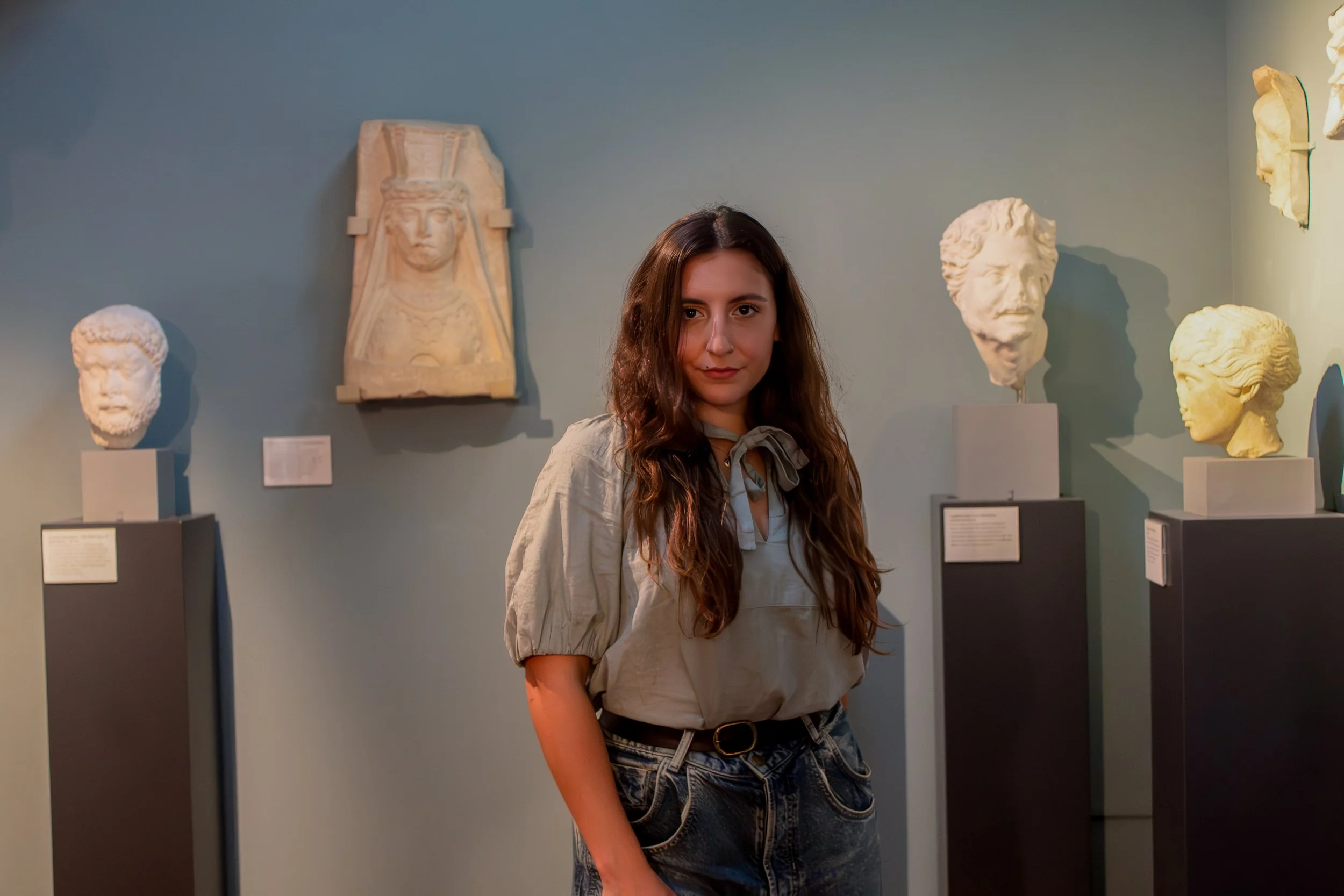
ISSABELLA ORLANDO IS AN ITALIAN-CANADIAN CREATIVE PRODUCER, FILMMAKER, WRITER, ARTIST, & CONSULTANT BASED IN LONDON. Obsessed with our roots, Issabella brings a background in cultural storytelling, heritage, and the arts to her work across industries.
IN HER CONSULTING PRACTICE, Issabella helps brands to develop relevance, authenticity and cultural positioning through storytelling, content, and partnerships strategy informed by creative ecosystems and culture. Offering strategic and creative vision, her work earns meaningful audience engagement, cultural relevance, brand awareness and strategic positioning for the brands she works with - across wellness, fashion, food, luxury, travel, arts & culture, and editorial.
THROUGH HER CREATIVE STUDIO, AETIA, Issabella leads the direction and production of films and multimedia content that connect audiences with creative people, artistic & artisanal processes, living heritage, and cultural communities. Her bespoke documentaries and profiles help brands to develop and grow their audiences, and differentiate within the market through creative and cultural storytelling.
IN HER ARTISTIC PRACTICE, Issabella engages cultural research, creative writing, experimental & documentary filmmaking, and facilitation to blend storytelling, research, and education with creative practice, poetic writing, and moving image. Her work enquires into how the past shapes and remains tethered to our present lives through craft, memory, landscape, grief, and the supernatural.
Issabella is available to work independently, through her studio, and in collaboration with agencies on worldwide commissions, projects, and other inquiries. Get in touch here.
EDUCATION
MSc Archaeology, University of Oxford
BA Classical Studies, King’s College London
CLIENTS
Monocle, Google Arts & Culture, GAIL’s, Puig, ZAZI, Dulwich Picture Gallery, South London Gallery, The Courtauld Gallery, Sir John Soane’s Museum, World Monuments Fund, Visit Jericho, Education First, University of Leiden +++
✯ A NOTE FROM ISSABELLA // ON MY WORK ANND ITS PURPOSE ✯
When I studied ancient history, I was fascinated by the Greek Dark Age. A period of several centuries when all writing ceased and the success of the Bronze Age seems to have disappeared. Scholars have thought virtually nothing happened during this time, until recently.
Emerging research is exploring the possibility that the Dark Age wasn’t as dark as we think. That perhaps, in the face of threats both natural and human, sophisticated prehistoric societies did not disappear or end, but rather crouched closer to the ground and waited out the storm. The Greeks may have stopped keeping records or building elaborate structures, but they are still there in the archaeological record, tending to the hearths of their longhouses. I imagine them carrying the torch of a past golden age through the stories they told over firelight; stories that would become Homer’s Iliad once written down centuries later. A handful of rich and elaborate Dark Age burials, too, wink at a level of cultural depth that otherwise seems totally lost.
All as if to say — we remember how great we can be, how grand; but for this moment, we choose to be small, and quiet, and close to the earth, waiting for whatever is to come.
Sometimes I think we may be in one of those Dark Ages now. But rather than seeing it as a total end, maybe we are being asked to put our collective ego to one side and get quiet. To pause, on a massive scale, and return to the methods and ways that have sustained our kind for centuries. To plant ourselves firmly, take root someplace deep in the silent dirt, gestating slowly until we emerge into the light again.
But not now. It’s not time to emerge yet. For the moment, maybe less is more. Maybe all the strife we are seeing and experiencing is asking us to return to a more basic existence, of sustenance and survival and simplicity. Maybe this is what will remind us of our humanity, whatever that means — intelligence and insignificance. Potential and futility.
A return to craftsmanship, regeneration, sustainability and connection is already underway. I speculate that this growing appetite for the old ways is what underpins it; the need to step off our pedestal as a species and spend some time — a few years, a generation, a century, who knows — reconnecting to a way of living and being that is far more human, so divorced from where we are now, in order to prime ourselves and our children for whatever leap we’ll make next.
I see my tiny piece of this grand puzzle as this: to find and tell stories that show us how fulfilling, enriching, masterful, beautiful, and impressive a life closer to the ground can be in its own right. Exploring the possibility that maybe this next chapter in our history is one we can look forward to and yield something valuable from. Craft and food, landscape and culture. Our very roots. This is what I believe will sustain us in the stretch of time, however long, that is to come.